
CAA
Preparing for CAA School: Clinical Exposure That Strengthens Your Application
What future Certified Anesthesiologist Assistants can learn from shadowing, healthcare work, and careful experience documentation.
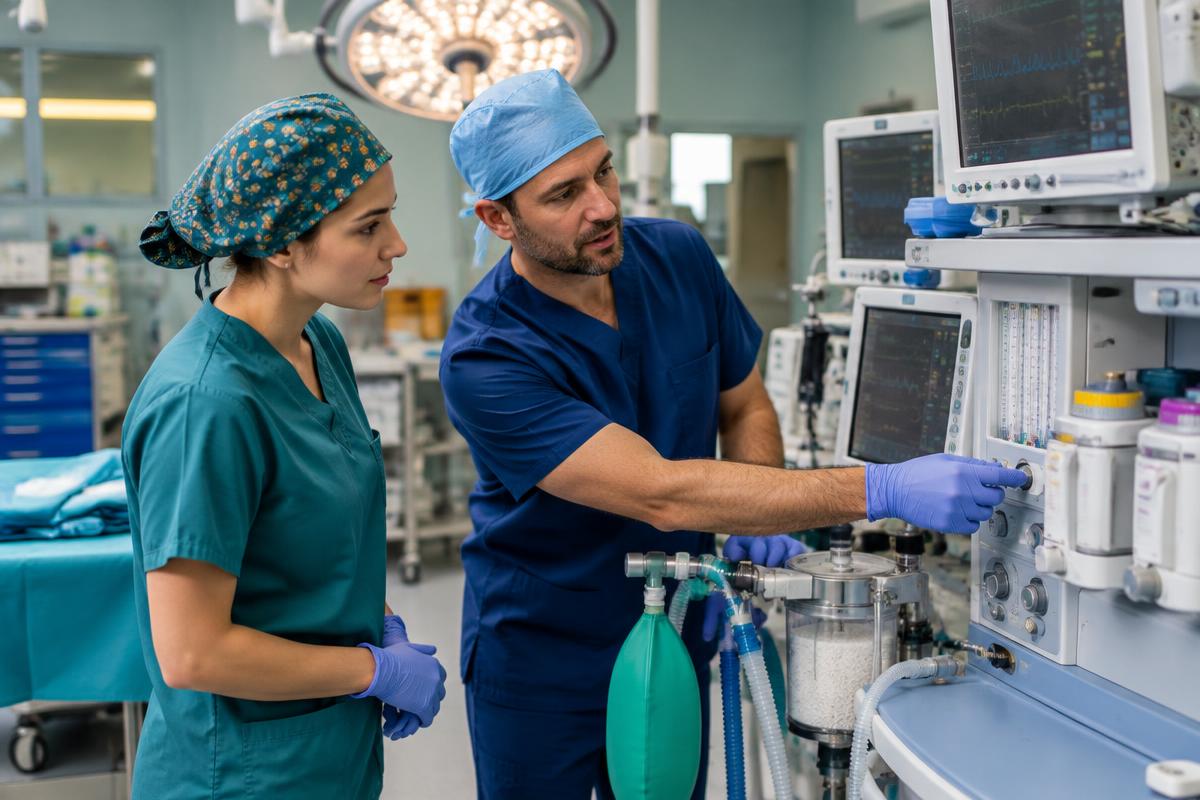
Certified Anesthesiologist Assistant programs prepare students for a highly technical, team-based role in anesthesia care. Relevant exposure can help you decide whether that environment fits you and give you concrete experiences to discuss when you apply.
Learn the anesthesia care environment
Anesthesia is more than the moments immediately before and after a procedure. The work involves preparation, vigilance, physiology, pharmacology, communication, and rapid response within an anesthesia care team. Observing this workflow can make your understanding of the profession more specific and realistic.
When possible, seek approved observation with a CAA and an anesthesiologist. Ask the program or facility what is permitted, complete any required onboarding, and respect every privacy and safety rule. Observation is educational; it does not authorize you to perform clinical tasks.
Use shadowing to ask better career questions
Pay attention to how the team prepares for a case, divides responsibilities, communicates changes, and maintains attention over time. Notice the balance between technical work and patient reassurance. These observations are more useful than trying to memorize every medication or monitor value.
- How does the CAA contribute before, during, and after a procedure?
- What makes communication effective in an operating room?
- How do providers remain precise during routine and unexpected events?
- Which parts of the work energize you, and which require further exploration?
Add experiences that build transferable skills
Programs may value experiences that demonstrate comfort in healthcare, teamwork, service, and academic readiness. Roles such as medical assistant, EMT, patient care technician, phlebotomist, respiratory care aide where permitted, or hospital volunteer can develop useful context. The duties and local requirements matter more than the title.
A job outside healthcare can also provide evidence of composure, accountability, or communication. The goal is not to force every activity into an anesthesia category; it is to understand what each experience taught you and describe it honestly.
Keep an application-ready record
For every experience, save the organization, location, provider or supervisor, professional credentials, dates, total hours, and a concise description of what you observed or did. Ask for verification near the end of an experience rather than years later.
CAA programs set their own prerequisites and expectations, and the profession is authorized in specific jurisdictions. Confirm current requirements directly with each program and use official professional and state resources when planning where you hope to practice.
Admissions requirements and experience classifications vary by school and can change. Confirm current expectations directly with each program before applying.